The revenue structure of family entertainment centers is changing. Traditional payout games continue to perform well, but new gambling-style arcade games are gaining popularity due to their higher interactivity, longer play cycles, and higher return rates. By analyzing monthly performance data and operator reports, I've come to understand why many family entertainment centers see these machines as a potential major revenue source for the coming years.
Below is a practical analysis of why gambling-style arcade games are economically attractive and an explanation of why they may become a core part of the FEC's revenue model.
What is the definition of gambling arcade games today?
They use probability and strategy, rather than relying purely on luck.
Modern betting arcade games are not gambling. They employ probability-based outcomes combined with visible odds, multipliers, or strategy options. Players choose an option, view the odds, and then wait for the result. The thrill comes from risk assessment, not from real money bets.
Formats similar to:
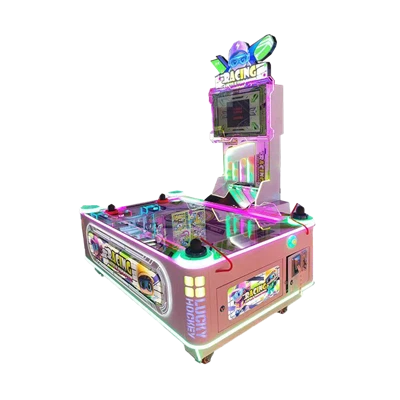
Horse racing arcade games
Fishing-style slot machines
Coin pushers with multipliers
Multiplayer progressive jackpot tables
This category is growing rapidly because it appeals to both casual and experienced players.
They can extend game time
Game duration is one of the most powerful indicators of revenue forecasting. Betting-based arcade games typically hold players for longer periods compared to machines that provide instant results.
Operator average data shows:
Average session duration: 3.5-6 minutes
Number of game repetitions per session: 2-4 rounds
Average group discussions last 12-18 minutes.
Longer game duration directly translates to higher revenue per player.
Why are these games becoming a high-value source of revenue?
Players revert more frequently in probability-based games.
One of its main advantages lies in the "try again" mentality. When players feel they narrowly missed out or were close to reaching the multiplier reward, they often restart the game on the same visit-and even play again in the following days.
Data from a mid-sized food export center shows:
Repeat play rates are 28% to 45% higher than traditional video games.
Among adults using probability-based machines, repeat visit rates increased by 15% to 22%.
60% of players who play for more than 5 minutes return to the game within 14 days.
The data demonstrates a simple pattern: probability-based mechanisms are more appealing to players than standard arcade formats.
Adults are more involved and spend more than children.
Demographic data is important. Gambling-style arcade games are more appealing to adults than traditional payout games.
Current operator data:
Adult players account for 50% to 70% of total game volume.
Adult players spend an average of 1.8 times more per visit than younger players.
Players aged 21 to 40 have the highest repeat gaming rate.
Family entertainment centers looking to expand their adult customer base rely more heavily on these machines because adult customers provide a more stable source of revenue.
Multiplayer betting games create group consumption
Multiplayer gaming machines (such as horse racing tables or multiplayer progressive jackpot games) generate substantial revenue during peak hours.
Group behavior data:
6-8 player tables generate 3-5 times more revenue than single-player machines.
41% of total weekend revenue comes from group sessions.
Group players spend 22% to 34% more time on probability-based gaming machines compared to standard arcade machines.
This is one of the strongest indicators that gambling is becoming a core attraction.
Revenue performance compared to other arcade game categories

Higher revenue per square foot
Space efficiency is paramount in the planning of Family Entertainment Centers (FECs). Gaming arcade games consistently outperform most other game types in terms of revenue per square foot.
Across multiple venues:
Probability-based games: $350 to $650 per square foot per month.
Standard redemption rate: $180-$350 per square foot.
Pure video games: $70-$150 per square foot.
This gap explains why space-constrained venues prefer these machines.

Monthly revenue shows a more stable trend.
Some machines peak on weekends and then drop sharply on weekdays. Gaming games, on the other hand, have a more gradual and stable customer flow distribution because adults play games more frequently.
Average operator data for Q1-Q3:
Monthly revenue per machine: $2,800 to $6,500
Low weekday churn rate: only 18%–26%
Weekend surge: 40% to 60%.
Stability is one of the main reasons investors consider these machines to be less risky.

Faster return on investment than most FEC machines
Most arcade-style gaming machines are priced between $5,000 and $11,000. Due to their high profitability, the payback period is typically short.
Typical ROI:
High-traffic home entertainment centers: 3-6 months
Medium-traffic locations: 6-9 months
In strong markets, high-performance multiplayer gaming models can achieve a return on investment in 2-3 months.
This ROI profile aligns with the goals many operators seek when expanding or updating their gaming portfolios.
Why they are likely to become the next major source of revenue

Player engagement metrics align with profitability
Based on interaction data (session duration, repeat visits, average spending, multiplayer gaming), these machines consistently outperform most traditional games.
Player behavior metrics:
Longer sessions
Emotional engagement
Predictable return visits
Increased adult spending
These patterns align with the revenue model upon which family entertainment centers rely for long-term sustainable development.

They conform to the new FEC business model.
Modern family entertainment centers are evolving in the following directions:
Longer customer dwell time
Hybrid entertainment models
Digital credit systems
Mixed demographics of families and adults
Gambling-style arcade games fit all these models, especially in venues designed to increase adult foot traffic without actually offering gambling.

They are supplements to existing games, not replacements.
Another reason for the increased popularity of gambling games is that they don't cannibalize revenue from other machines. They attract different consumer groups and demographics, resulting in incremental revenue rather than replacing existing revenue streams.
Operators continue to report:
Adding probability-based machines increased incremental revenue by 12% to 25%.
No negative impact on redemption gains.
This means that games can increase total revenue.
in conclusion
Based on current performance data, adult player engagement patterns, and ROI results, arcade-style games are poised to become a major revenue stream for family entertainment centers (FECs). These games, which combine elements of probability, strategy, and multiplayer gaming, are designed to generate consistent revenue and increase customer retention. For FECs looking to improve both short-term revenue and long-term customer retention, these machines offer a clear and data-driven opportunity.