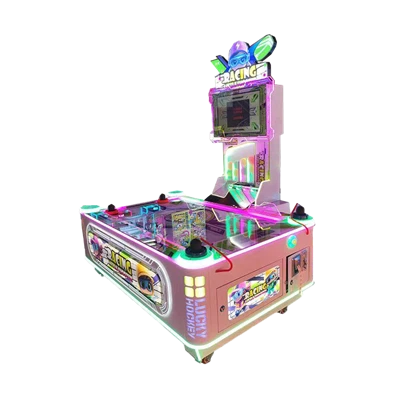
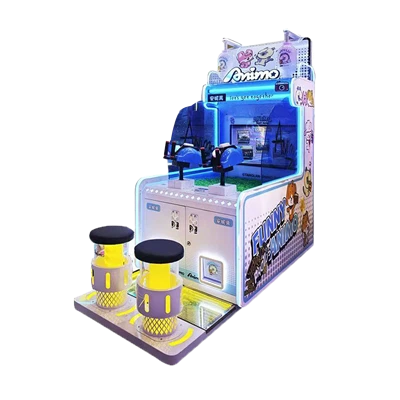
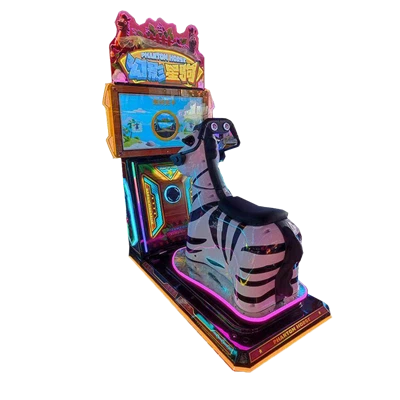
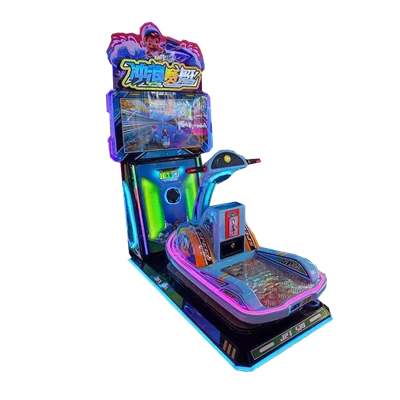
Before buying racing games for arcade machines, many operators focus first on screen size, car licenses, or visual effects, but the real factors that decide long-term profit are often hidden behind the cabinet, inside the hardware structure, and within the game's update system, because if these parts are weak, even a popular racing game can quickly turn into a high-maintenance problem that loses players over time.
How Racing Games Actually Make Money in Arcade Locations
Why racing games remain high-frequency arcade machines
Racing games continue to perform well in arcade locations because they combine simple entry with strong repeat play, meaning new players can understand the controls in seconds while returning players stay engaged through better lap times, competition with friends, and score rankings, which is why operators should always judge a racing game by how well it supports long-term replay rather than by first-time visual impact alone.
Understanding the real earning cycle of arcade racing games
In real operations, racing arcade machines usually earn in stages, with early revenue driven by curiosity and novelty, mid-term income supported by skill improvement and competition, and long-term performance depending on system stability and content freshness, which means buyers should evaluate machines with at least a two- to three-year operation plan in mind instead of focusing only on the launch period.
Choosing the Right Type of Racing Game for Different Venues
Where simulation-style racing games truly fit
Simulation racing games focus on steering feedback, pedal control, and realistic driving physics, making them more suitable for large arcades or entertainment centers with older players, but during evaluation, operators should carefully check whether the steering system uses durable metal shafts and whether the pedals are modular, because weak mechanical design often leads to calibration problems and high repair rates under heavy daily use.
The business value of entertainment-style racing games
Entertainment-style racing games are easier to play and visually brighter, which makes them ideal for family entertainment centers and mixed-age locations, but their success depends less on realism and more on track variety, balanced game difficulty, and multiplayer support, since these factors decide whether players will insert more coins instead of leaving after a single race.
Quality Differences Are Often Hidden from the First Look

How to judge build quality beyond appearance
Many quality issues do not appear during showroom demos, so buyers should inspect internal structure details such as whether the steering wheel uses independent bearings, whether the motor has overload protection, and whether control parts are designed as replaceable modules, because these details directly affect whether the machine can survive years of constant use without frequent downtime.
Software stability matters more than graphics
While high-resolution graphics attract attention, software stability determines daily operation, since a racing game that freezes, crashes, or restarts during peak hours can quickly damage player trust and revenue, which is why operators should ask about system recovery features, update history, and whether the software can resume normally after power interruptions.

How to Confirm Long-Term Update and Compatibility Ability
Practical ways to evaluate a game's update life
To confirm long-term update ability, operators should look beyond promises and check whether the developer has a clear update record, whether new tracks or cars were actually released in the past, and whether updates are delivered through software instead of hardware replacement, because a racing game that requires full system changes for upgrades often becomes outdated much faster than expected.
Compatibility determines future expansion
As arcade systems continue to evolve, racing games must remain compatible with new screens, payment systems, and network features, so buyers should confirm that the main control system uses standard interfaces and open architecture, since closed systems usually limit upgrades and increase future replacement costs.
The Most Common Problem Parts in Long-Term Operation
Steering wheels and pedals as long-term risk points
From long-term operation data, steering return mechanisms and pedal sensors are the most common failure points, and if the supplier cannot provide replacement parts separately or offer clear maintenance guidance, even small problems can force the entire machine offline, which makes spare part availability a key factor during purchase decisions.
Display systems and heat management issues
Racing arcade machines run for long hours under heavy load, and poor heat design or weak power systems often cause screen blackouts or automatic shutdowns, so operators should understand the cooling structure and power capacity instead of judging display quality only by size or resolution.
A Practical Step-by-Step Buying Process for Arcade Operators
From venue analysis to machine selection
A practical buying process starts with analyzing venue size, customer age range, and average daily traffic, followed by choosing between simulation or entertainment racing games, then shortlisting suppliers with proven stability and update support, testing sample machines for control response and system reliability, and only then moving to price and delivery negotiations, which helps avoid impulse purchases based on appearance alone.
Key details to confirm before placing the order
Before placing a final order, operators should clearly confirm spare part availability, software update terms, after-sales response time, and whether future expansion will allow the same model to be reordered, since these details directly affect long-term cost control and stable income.
Conclusion: Choosing the Right Racing Game Matters More Than Choosing the Most Expensive One
The best racing games for arcade machines are not defined by the most advanced graphics or the highest price, but by stable operation, realistic maintenance costs, and the ability to stay fresh over time, and by following a structured evaluation process instead of relying on surface impressions, arcade operators can still make racing games one of the most reliable profit sources in 2026 and beyond.