Racing arcade layout: 7 powerful design wins
racing arcade layout is the single most important operational decision that separates background machines from headline revenue generators. A smart floorplan turns walk-bys into players, short browsers into repeat customers, and casual events into shareable social moments. This guide gives seven practical design wins - sightlines, circulation, seating spacing, spectator zones, cashier/scan layout, scenario-based placement, and quick A/B test ideas - so you can commission a paid re-layout with confidence.

1 - Sightlines: make prize and action visible within 5–10 meters
What is it? Sightlines are the unbroken visual paths from main walkways and entrances to your machines.
Why it matters: If the play or prizes are visible from 5–10 meters, conversion jumps. Hide the machines behind kiosks or pillars and you lose impulse plays.
How to implement: place premium lanes on axis with primary foot traffic, use low backdrops and focused lighting to make cockpits pop, and avoid placing tall signage directly in front of machines.
2 - Circulation and approach flow: keep players moving, not stalled
What is it? Circulation is how people approach, queue, and leave machines.
Best practice: leave at least 1.8–2.2 m for approach and spectator space; place quick-exit routes to food or POS so players can transition to other revenue points. Mark clear queuing with floor decals to avoid congestion during events.
3 - Seat spacing and ergonomics: comfort equals longer sessions
Rule of thumb: maintain 0.5–0.8 m between cockpits for elbow room; premium rigs need extra lateral clearance for motion. Choose cockpits with adjustable mounts so both adults and teens can play comfortably - ergonomics directly impacts session length.

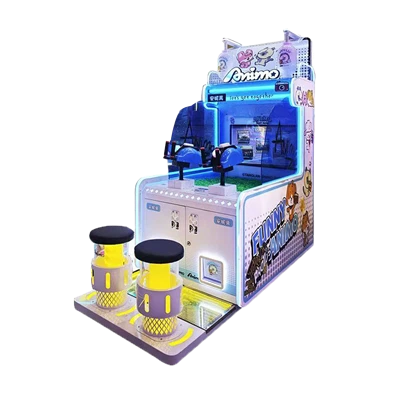
Animo Super Racing is a high-impact arcade racing machine engineered for family entertainment centers, malls and arcades that want a compact, visually striking racer with solid ROI potential. The cabinet features a high-definition LCD display and authentic controls - a realistic steering wheel plus brake and throttle - while simple push-button commands activate acceleration effects and toggle between different in-game camera angles for a more immersive ride.
4 - Spectator & social zones: design for sharing
Dedicated spectator spaces (benches, bar-height counters) increase dwell and social clips. Place LED leaderboards and branded photo backdrops adjacent to premium rigs so winners get filmed with good lighting and a promotable backdrop.
5 - Cashier / scan & ticketing layout: reduce friction, increase conversion
Design cashier or scan points so a customer can reserve or pay within 10–15 seconds of finishing a game. For cashless venues, integrate mobile QR-pay lanes near premium rigs and ensure strong Wi-Fi coverage. For ticketed events, a dedicated kiosk near the entrance reduces line pressure.
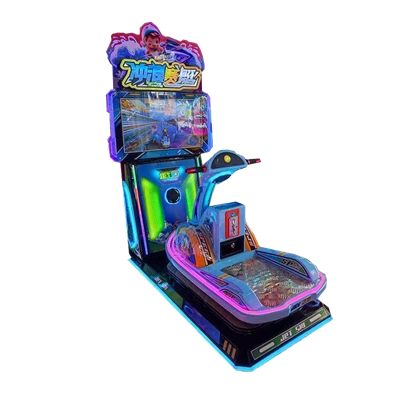
Racing Arcade Twin is a revenue-first, two-player racing cabinet engineered to deliver competitive, high-engagement gameplay while fitting efficiently on medium-sized arcade floors. Designed for family entertainment centers, shopping malls and event venues, the twin cockpit invites side-by-side competition - a proven trigger for longer dwell times and higher repeat plays.

6 - Scenario-based placement: match gear to location
- Mall / Airport (high foot traffic, low dwell): compact rigs near food courts and gates; visually striking units with short play times.
- Family FEC (long dwell): cluster 6–12 lanes with mixed tiers (2 premium motion, 4 mid, rest entry) and seating for parents.
- Arcade / Nightlife (social adults): 1–2 premium rigs with leaderboard screens, softer lighting, and adjacent high-top tables for food/drink service.
7 - Test, measure, iterate: A/B your layout changes
Run two-week A/B placement tests: swap a premium lane and a compact lane, then compare plays/day, session length and conversion rate. Track simple KPIs - plays/day per unit, ARPU, and refill frequency - and codify winning layouts as templates for future sites.

Quick checklist before commissioning a re-layout
- Verify sightline from two main entrances.
- Measure clearance: min 1.8 m front, 0.6 m rear service access.
- Confirm power & data points for each lane (spec 220V/110V, Ethernet/Wi-Fi).
- Add 1 spectator zone per 4 premium lanes.
- Place cashier/QR-scan within 10–15 seconds of premium rigs.