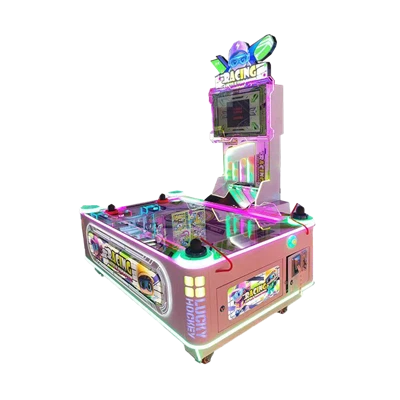
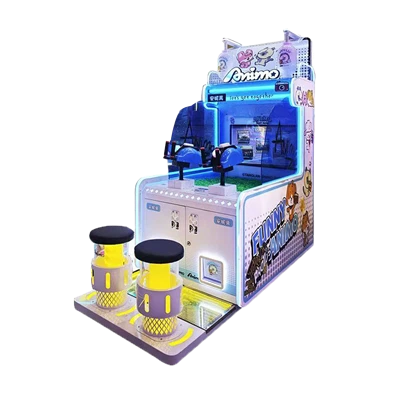
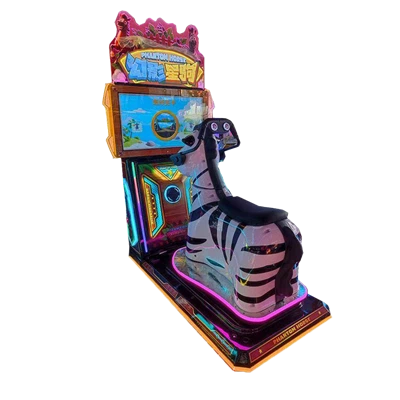
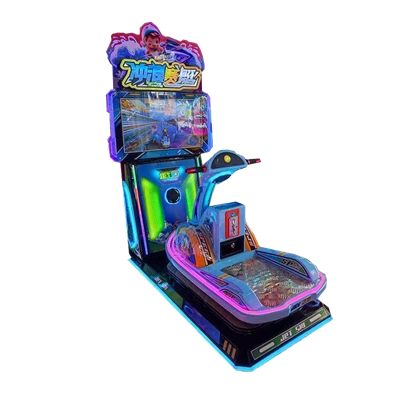
With horse racing arcade machines increasingly appearing in family entertainment centers, shopping malls, and game centers, I'm frequently asked whether they truly deliver substantial returns. From an operator's perspective, the real question is simple: can this machine generate sustained revenue, and how long will it take to recoup the costs?
Based on performance data provided by dealers and operator reports, the answer is, in short, yes-but only if the buyer understands how to evaluate the machine, its profit model, and the operating environment. The following is a detailed analysis.
Why is horse racing arcade game a sound investment?
They encourage extended playtime and group play.
Horse racing arcade games are designed with multiplayer gameplay at their core. Most machines support 4 to 10 players, with each group typically playing for 3 to 6 minutes, depending on the game settings.
The longer players stay, the more significant the revenue trend:
Operators report that average dwell time increases by 18% to 30% compared to single-player video games.
Machines with multiplayer betting mechanisms see a 20-45% increase in repetitive rounds per visit, especially during peak hours.
Longer user visits result in higher daily revenue and more stable traffic.
They appeal to a wide range of age groups
Unlike fast-paced games, horse racing arcade games appeal to adults, teenagers, and families. The decision-making and luck elements make the game easy to pick up, even for players unfamiliar with arcade games.
According to actual operator data:
Adult players account for 55% to 65% of total game plays.
Family groups contribute 40% of peak-hour revenue.
This age diversity reduces revenue fluctuations between different dates and seasons.
They can provide stable income regardless of peak or off-peak hours.
Fast-paced games typically perform exceptionally well in the evenings and on weekends. Horse racing games, on the other hand, show a more moderate performance.
Average performance patterns show:
Peak hour revenue share: 60%
Off-peak hour revenue share: 40%
A more balanced curve makes prediction easier, which is crucial for long-term ROI.
Breakdown of Real Revenue and Return on Investment
To determine whether a horse racing arcade machine is "worth it," I would consider three factors: purchase cost, average daily revenue, and maintenance requirements.
Initial Costs and Setup
Typical horse racing arcade machines fall into the following categories:
Mid-range: $4,800 to $7,500
Large multiplayer machines: $8,000 to over $12,000
Operators who install machines in malls or home entertainment centers typically state that installation costs, including delivery, calibration, and site preparation, range from $150 to $400.
Daily Revenue Forecast
According to operator surveys and buyer reports in Asia, the Middle East, and North America, common revenue ranges are as follows:
| Location Type | Average Daily Plays | Average Ticket Price | Estimated Daily Revenue |
|---|---|---|---|
| Malls | 90–140 | $1–$1.50 | $90–$210 |
| FECs | 110–170 | $1 | $110–$170 |
| Tourist Areas | 150–250 | $1–$2 | $150–$380 |
For most operators, a safe benchmark price is $100 to $160 per day, assuming moderate foot traffic.
Monthly and Annual Revenue Forecasts
Using a conservative daily model:
Daily income: $120
Monthly income: $3,600
Annual income: $43,200
Even with the lowest configuration reported ($90 per day), this machine could generate approximately $2,700 per month.
Operating and Maintenance Costs
Horse racing arcade machines have relatively low maintenance costs because their mechanics are simpler than those of car simulators or VR devices.
Typical monthly costs include:
Consumables + Wear Parts: $20-$60
Electricity: $15-$25
General Maintenance: Approximately $20
Total monthly costs are typically below $100.
This is significantly cheaper than high-end racing games, which typically cost between $150 and $300 per month to maintain.
Calculate the return on investment for horse racing arcade game machines
Return on investment (ROI) is more important than any feature list. Here are the actual calculations.
Standard Return on Investment Formula
A simple and easy-to-use method for calculating ROI:
ROI = (Monthly Net Profit ÷ Total Cost) × 100
Let's imagine a real-world scenario:
Machine Cost: $8,000
Average Daily Revenue: $120
Monthly Revenue: $3,600
Monthly Expenses: $80
Monthly Net Profit: $3,520
Investment Recovery Period
Payback period = Total cost ÷ Monthly net profit
= $8,000 ÷ $3,520
≈ 2.3 months
Even if the machine's performance only reaches 60% of its expected level, the payback period is still approximately 4-5 months.
According to operator reports, most horse racing arcade machines can recoup their costs within 3-6 months, making them among the fastest-growing machines in the arcade market.
When is it most cost-effective to invest in horse racing arcade game machines?

Locations with high foot traffic
Shopping malls, large supermarkets, family entertainment centers, and tourist attractions consistently outperform small shops. These locations typically achieve:
150-250+ plays per day
25% to 40% quarter-over-quarter revenue growth
These machines scale well in areas with high foot traffic.

A company focused on family and group entertainment
Families are the primary source of revenue. If your venue already attracts families, horse racing arcade machines can typically generate good profits from day one.

Operators are seeking machines with low risk and low maintenance costs.
Unlike virtual reality or motion simulators, horse racing arcade games avoid the following:
Expensive motors
Expensive digital screens
Frequent software updates
This keeps the total cost of ownership low and predictable.
in conclusion
Based on profitability, operating costs, and actual ROI data, horse racing arcade machines represent a worthwhile investment for many businesses. They attract a wide range of players of all ages, encourage extended playtime, perform well during both peak and off-peak hours, and typically recoup costs within 3-6 months.
For operators seeking machines that deliver stable revenue, measurable ROI, and low maintenance costs, horse racing arcade games remain one of the most reliable options in today's arcade market.