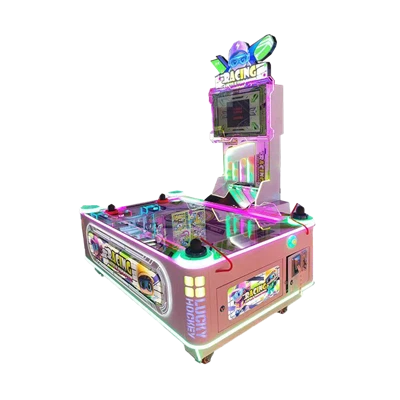
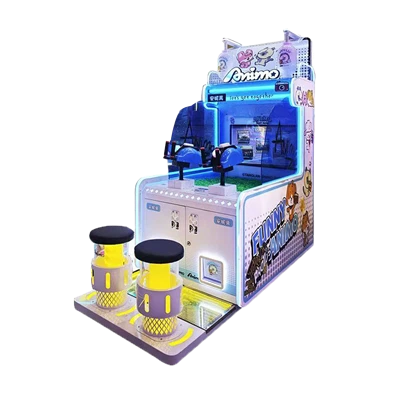
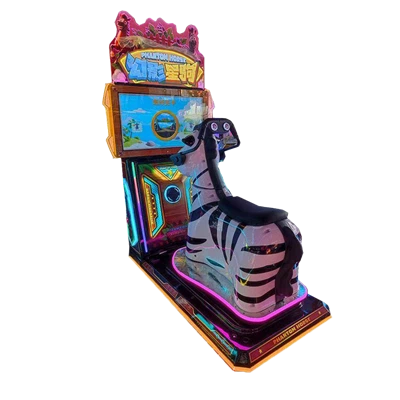
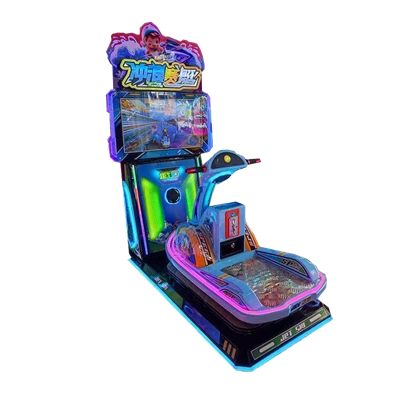
When I research the best-performing arcade games on the market today, modern racing games consistently stand out. Their high revenue stems not only from excellent design, but also from the advanced technology within the cabinet-hardware, software, sensors, and motion systems work together to influence player experience, playtime, and repeat business. Understanding these technologies helps me assess which racing game machines can truly create value in home entertainment centers or game centers.
In this guide, I will detail the key technologies behind modern racing arcade games and explain why each technology impacts revenue, player satisfaction, and long-term ROI.
Advanced graphics and display technologies shape the player experience
High-resolution screens extend game time
Most modern racing arcade machines now use 43-65 inch 1080p or 4K displays. Screen clarity directly impacts player playtime.
Industry performance reports show:
Compared to older 720p machines, machines equipped with 1080p or higher resolution displays generate 18-25% more playtime per day.
Larger screens increase viewer interest, leading to a 10-15% increase in impulse purchases.
Clearer visuals make judging turns, speed, and movement easier, reducing frustration and encouraging repeat play.
The improved graphics engine enhances realism.
Current racing games rely on advanced graphics engines similar to those used in console games. These engines include:
Real-time lighting
Particle effects
Physically based rendering
High frame rate output (typically 60 FPS)
Higher frame rates result in a smoother driving experience, avoiding motion sickness and thus improving user satisfaction. Stability is crucial: Carriers report that machines running stably at 60 FPS can increase replayability by 12%.
Motion and feedback systems affect player immersion.
The force feedback steering system is more precise.
Modern steering systems employ brushless motors and multi-level force feedback, providing more precise road feel compared to older belt-driven steering wheels.
Force feedback is important because:
It gives the driver a greater sense of control, reducing early performance dips.
Machines equipped with advanced steering systems have a 22-30% higher replay rate.
This is one of the most significant contributors to long-term revenue.
Dynamic Seats and Vibrations Enhance Body Interaction
Many high-performance arcade machines now include the following components:
Seat vibration synchronized with engine speed
Built-in subwoofer in the seat
Dynamic tilt platform (high-end models)
Even basic vibration systems can enhance engagement. A 2024 FEC report showed that:
Racing machines equipped with motion sensors can increase monthly revenue by 25% to 40%.
Players tend to spend 15% to 20% more time in front of the machine.
These systems create a driving feel that players cannot obtain in mobile or console racing games, making arcade racing games significantly more appealing.
Network and multiplayer gaming technologies drive revenue growth

Related games encourage group consumption
Modern racing arcade games typically support 2 to 8 machines connected online. Online gaming is one of the main revenue streams because it creates direct competition.
Based on operator data:
Online cabinets generate 35% to 55% more revenue than single cabinets.
Group visits spend 1.3 to 1.6 times more per visit than individual visits.
Players are 28% more likely to replay when racing with friends.
Network reliability is crucial. Machines with stable, low-latency connections generate more consistent revenue because multiplayer games can start smoothly.
Cloud-based leaderboards increase repeat visits
Some modern racing games sync scores to online leaderboards, incentivizing players to constantly break records. Performance data shows:
Leaderboards can increase repeat visitors by 12% to 19%.
Weekly tournaments can increase weekend revenue by 8% to 14%.
This continuous challenge allows games to maintain their longevity after the initial novelty wears off.

Improve hardware reliability and reduce maintenance costs

Durable internal components reduce downtime.
Modern machine features:
Industrial-grade PCs
Solid-state drives
Enhanced cooling systems
Reinforced steering components
These improvements reduce failure rates. Operator reports:
Failure rates are 35% to 45% lower than models from prior to 2018.
Average annual maintenance costs are $250 to $400, lower than many other machines.
Reduced downtime directly translates to higher revenue, especially during peak hours.

Modular design speeds up repairs.
Many modern racing cars utilize modular components-screens, controls, pedals-designed for quick replacement. This reduces maintenance time from hours to minutes.
FECs Modular Racing Report:
20-30% reduction in revenue loss during maintenance
Faster turnaround times during busy weekends
Reliability is part of the economic value of modern racing technology, not just convenience.
Why is this technology so crucial for operators?
Higher user engagement = higher revenue
All these technologies-screens, motion systems, networks, and durable components-directly contribute to revenue. High-tech racing game machines maintain their popularity for longer, attract a wider audience, and command higher prices per game.
In high-traffic venues, a modern racing arcade machine typically generates the following revenue:
A single seat costs between $2,500 and $5,000 per month.
Alternatively, a configuration connecting 2-4 seats costs between $6,000 and $12,000 per month.
These figures demonstrate that racing games are one of the most stable game genres in the arcade industry.
More advanced technology extends the machine's lifespan.
A well-designed, modern kitchen cabinet can generate continuous profits for 5-8 years. Software updates and online features further extend its lifespan.
Long lifespan + high monthly income = high return on investment.
Final words
The technology used in modern racing arcade machines directly impacts player behavior and operator revenue. Graphics, motion systems, multiplayer networks, and durable hardware work together to create a machine that delivers consistent profitability, appeals to players of all ages, and provides long-term value.
For any racing club planning future investments, understanding these technologies helps ensure the right cars generate substantial returns from the outset.