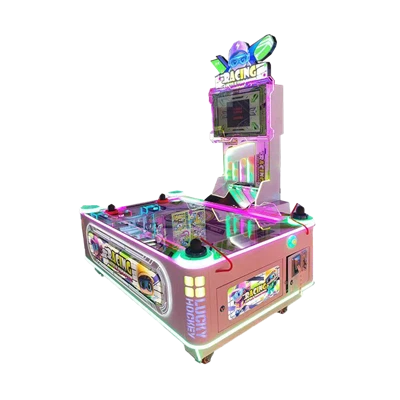
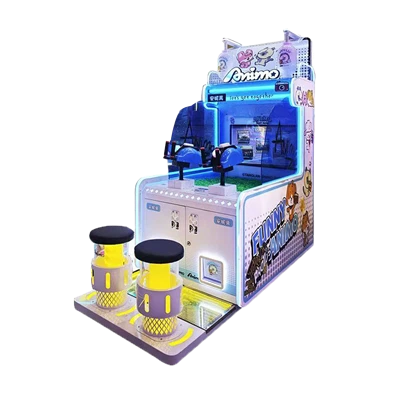
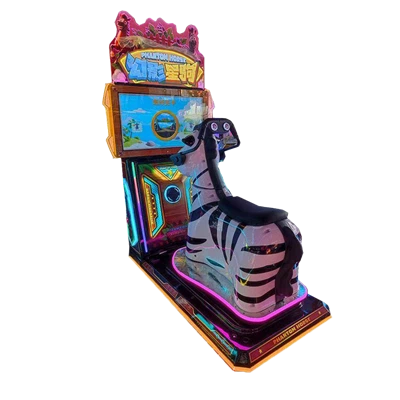
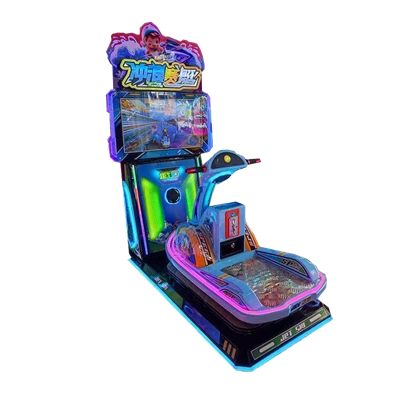
When people think about how to increase profits in the entertainment industry, they often think of expanding venues, adding new machines, or increasing marketing spending. But in many locations-such as shopping malls, family entertainment centers, cinemas, restaurants, or convenience stores-a well-chosen arcade machine can significantly boost monthly revenue.
Not every machine performs the same way, and not every location will produce the same results. However, when a machine is matched with foot traffic, audience type, play frequency, and operational goals, its impact can be enormous. Having operated various arcade machines in multiple environments, I have personally witnessed how the right machine can increase user engagement, dwell time, and revenue without major operational adjustments.
Why can a single machine have such an impact?
A profitable arcade machine is more than just a cash machine; it can change customer behavior. When customers stop to watch, play, or return, the machine becomes part of the business model, not just a piece of equipment.
Direct income
This is the most obvious impact. One machine can generate:
$1.00 per game
Depending on traffic, 40-120 games can be played daily, generating
$1,200-$3,600 in revenue per month, depending on the season and traffic patterns.
While the amounts vary, the principle remains the same: consistent small transactions create a cumulative effect.
Indirect income
A good arcade machine can also:
Increase customer dwell time
Slow down customer flow (especially beneficial for malls and food courts)
Encourage repeat visits
Even though indirect revenue cannot be directly measured, operators often notice that customers spend more on food, retail, or services due to longer dwell times.
What factors determine whether one machine performs better than another?
Not all machines produce the same results. Performance isn't solely determined by design or price.
Here are the key factors I evaluated before purchasing.
1. Match the machine with the target audience.
The machine type must match the passing user.
| Location Type | Best Matching Machine Types |
|---|---|
| Kids-focused areas | Claw machines, small redemption games |
| Teen or college environment | Competitive skill games, basketball arcade |
| Adults or parents | Prize vending, nostalgic pinball |
| Travel or waiting areas | Quick playtime games (20–60 seconds) |
If viewers cannot connect with the gameplay, even if the machine itself is of high quality, its usage will decrease.
2. Payment convenience is important.
I've noticed a simple pattern: if a game only accepts in-game currency for payment, user engagement drops much faster. However, when users can pay via QR code, click-to-pay, or card, usage increases because the payment process is more convenient.
Machines offering multiple payment methods tend to generate more stable revenue, especially in areas where digital payments are widespread.
3. Game difficulty and settings will affect the replay experience.
Settings determine the experience and outcome. For example:
A claw machine with excessively high odds might make money quickly, but it can frustrate users.
A skill-based basketball arcade game with adjustable difficulty can maintain fairness and player engagement.
I typically adjust the settings within the first 30 days to understand how the location performs. Small changes can increase play frequency without increasing operating costs.
4. Operating and maintenance costs affect net income.
Revenue only makes sense after deducting costs.
Before purchasing, I check:
Energy consumption
Parts availability
Maintenance and repair panel
Expected lifespan of the controller or motor
Even if initial revenue seems promising, machines that frequently break down or consume excessive power will reduce profitability.
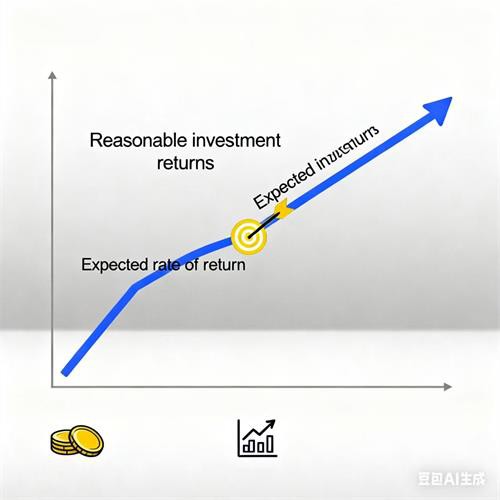
Reasonable investment returns and expected rate of return
A stable commercial machine typically recoups its cost within 3-12 months, depending on:
Personnel traffic
Price per game
Seasonal variations
Machine type
After the investment period, the machine becomes a low-maintenance, high-yield asset.
Some machines can generate revenue for five years or longer, especially with proper maintenance and a consistently fresh gameplay experience.
Where does a machine play its greatest role?
A single machine performs best in locations where the customer base meets the following criteria:
Waiting
Returning regularly
Spending a significant amount of time
With children
For example:
Shopping mall corridors
Outside theaters
Food courts
Family restaurants
Laundry facilities
Bowling alleys
Resorts and hotels
In such environments, the machine becomes part of daily life, rather than just an attractive object.
Finally
A good arcade machine is more than just equipment; it's a profit-generating tool. Through proper selection, configuration, and placement, an arcade machine can generate substantial revenue growth without increasing staff, space, or operational complexity.
For me, the turning point came when I realized this machine wasn't just about entertainment-it was about the recurring, predictable microtransactions every day.
If chosen correctly, a single machine can have a greater impact on monthly revenue than many larger business decisions.