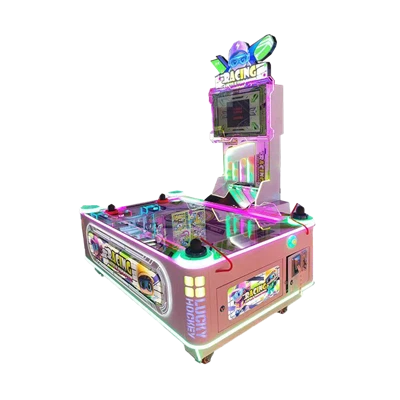
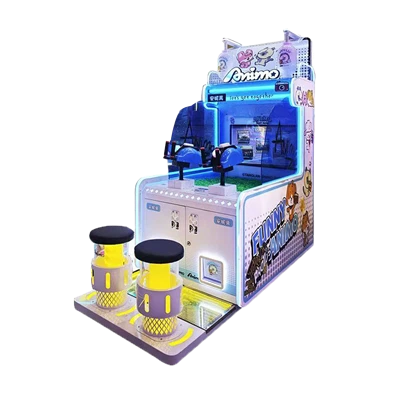
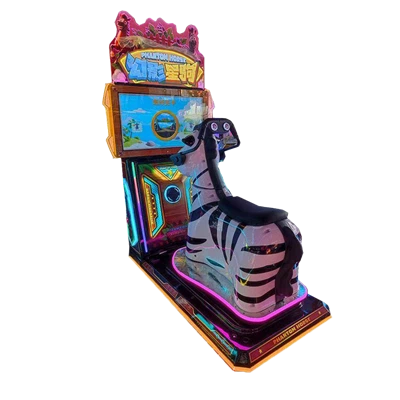
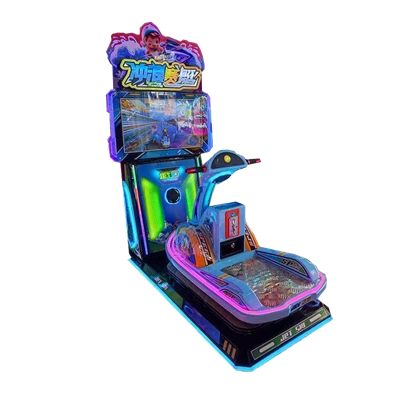
Racing arcade machines have consistently been one of the most reliable revenue generators for entertainment centers, but not all models are created equal. When comparing single-seat and two-seat racing arcades, the differences in revenue, player behavior, and venue utilization become apparent. Both options have their advantages, but which is better depends on the specific objectives of the venue.
Below is a detailed analysis based on actual operator reports, industry benchmarks, and firsthand experience.
Understanding the core differences

Single-player game consoles – individual games, with more machines placed throughout the venue.
Single-seat racing game machines are designed for a single player, with each machine serving only one user. Due to their small footprint, more machines can be placed in the same space. This means players can enjoy single-player gameplay without waiting for others to finish.
Typical characteristics:
Smaller footprint (typically 42–48 inches wide)
Lower purchase cost (typically $2,500 to $6,000, depending on the model)
Easier to maintain due to simpler wiring and fewer seat components.
Single-seat machines typically perform best in locations with consistent foot traffic, such as shopping malls, small arcades, bowling alleys, and entertainment centers with limited space.
Two-seat machine – social entertainment, higher initial costs.
Two-player racing games place two players in the same cabinet, typically competing on the same screen or linked software. These machines appeal to groups who enjoy playing games together-siblings, couples, and friends.
Typical characteristics:
Large footprint (65–80 inches wide)
High purchase cost (US$5,500 to over US$12,000, depending on the brand)
More attractive during peak hours due to the cooperative or competitive gameplay modes.
Two-seat slot machines tend to perform well in high-traffic family entertainment centers and large venues frequented by groups.

Revenue Comparison – Which company is more profitable?
Average Weekly Income Data
According to the operator's consolidated report for 2023-2024:
Single-seater racing: Average weekly revenue: $120 to $180 per unit
Two-seater racing: Average weekly revenue: $220 to $350 per unit
On the surface, two-seater aircraft seem to generate higher revenue per unit. However, the key issue lies in the return per square foot and per dollar invested, which often changes the final conclusion.
Revenue per square foot
Because a two-seater server rack occupies almost twice the space of a single-seater rack, the single-seater rack may offer better performance in terms of space utilization.
Typical floor plan example:
Two single-seater servers generate a combined $240 to $360 per week.
One two-seater server can generate $220 to $350 per week.
In space-constrained environments, two single-seater racks can often outperform a single two-seater rack by 10% to 25%.
This difference can be significant in spaces where every square foot is crucial.
Returns per dollar invested
Upfront Cost to Benefit Ratio
I frequently use payback period as a key metric.
Example of payback period estimation:
A single-seat server costs $4,000 and generates $150 in revenue per week; the payback period is approximately 26 weeks.
A dual-seat server costs $9,000 and generates $300 in revenue per week; the payback period is approximately 30 weeks.
While both offer excellent performance, single-seat racks typically recoup their costs faster due to lower upfront investment.
Long-term stability
On weekends and during peak hours, two-player slots may outperform single-player slots because two players tend to play together, especially in family-oriented venues. However, during lower-traffic periods, single-player slots offer better stability for individual play.
This explains why two-player slots have a higher peak in revenue, but also a deeper trough.
Differences in player behavior and engagement

Social Games Enhance Two-Seat Performance
Two-player slot machines appeal to groups seeking an interactive experience. In family entertainment centers, I've seen groups take turns playing slots, challenging each other. This extends playtime and increases overall revenue.
Typical two-player behavior patterns:
Longer average playtime per session (2-4 games per group)
High replay rate during peak hours
Performs better in competitive or one-on-one games
Single-seat configuration provides faster turnaround time.
Single-seat slot machines allow players to quickly log in and out. This results in:
Higher throughput
Better performance during weekday off-peak hours
Shorter wait times
For venues with stable foot traffic but fewer group visitors, this model can generate more stable revenue.

Maintenance and operating costs
Lower maintenance costs for single-seat aircraft
Due to fewer parts (one seat, one steering system, one set of pedals), long-term maintenance costs are lower.
Average Annual Maintenance Costs:
Single Seat: $150-$300
Double Seat: $250-$500
Double-seat machines require more time for alignment checks, wiring checks, and seat adjustments.
Two-seater models require more maintenance space.
Two-seat racks typically require more space for technicians to operate from the back or sides. In smaller spaces, this can complicate rack placement and maintenance.
Which position is more suitable for me?
Please select a single seat if the following conditions are met:
The floor space is compact.
You want a faster return on investment.
You have stable customer traffic, but it's not primarily driven by large groups.
You prefer a simpler approach to customer maintenance.
Please select a two-seater if the following conditions are met:
Your venue attracts families, teenagers, or groups.
You want to promote competitive or collaborative experiences.
You can free up additional floor space.
You want to generate higher revenue during peak hours.
Final words
Comparing the two models, neither the single-seat nor the two-seat racing car can outperform the other in all situations. Two-seat cars have higher revenue per unit, but single-seat cars often excel in revenue per square foot and return on investment speed. The final choice depends on foot traffic, available space, and the type of target customer group.